
Most HubSpot deployments don’t fail at go-live. They fail quietly, months later.
The platform is live. Data is migrated. Automation is running. And yet adoption slips, trust in reporting erodes, and RevOps ends up compensating manually.
This doesn’t happen because HubSpot is “too complex”. It happens because HubSpot is still being deployed like software, rather than operated as a revenue system.
What follows is how to think about HubSpot deployment when the goal is durability, control, and long-term value, not just launch.
Why “implementation” is the wrong mental model
The word implementation implies a finish line.
In reality, HubSpot encodes how a business operates:
how leads are defined and routed
how pipeline progresses
how ownership and SLAs are enforced
how performance is measured
Once those decisions are live, they compound. Good ones scale. Bad ones quietly degrade everything downstream.
That’s why a HubSpot deployment should be treated as an operating model, not a configuration exercise.

The full lifecycle most teams underestimate
The framework below outlines the full lifecycle required to deploy HubSpot as an enterprise system, not just a CRM instance.
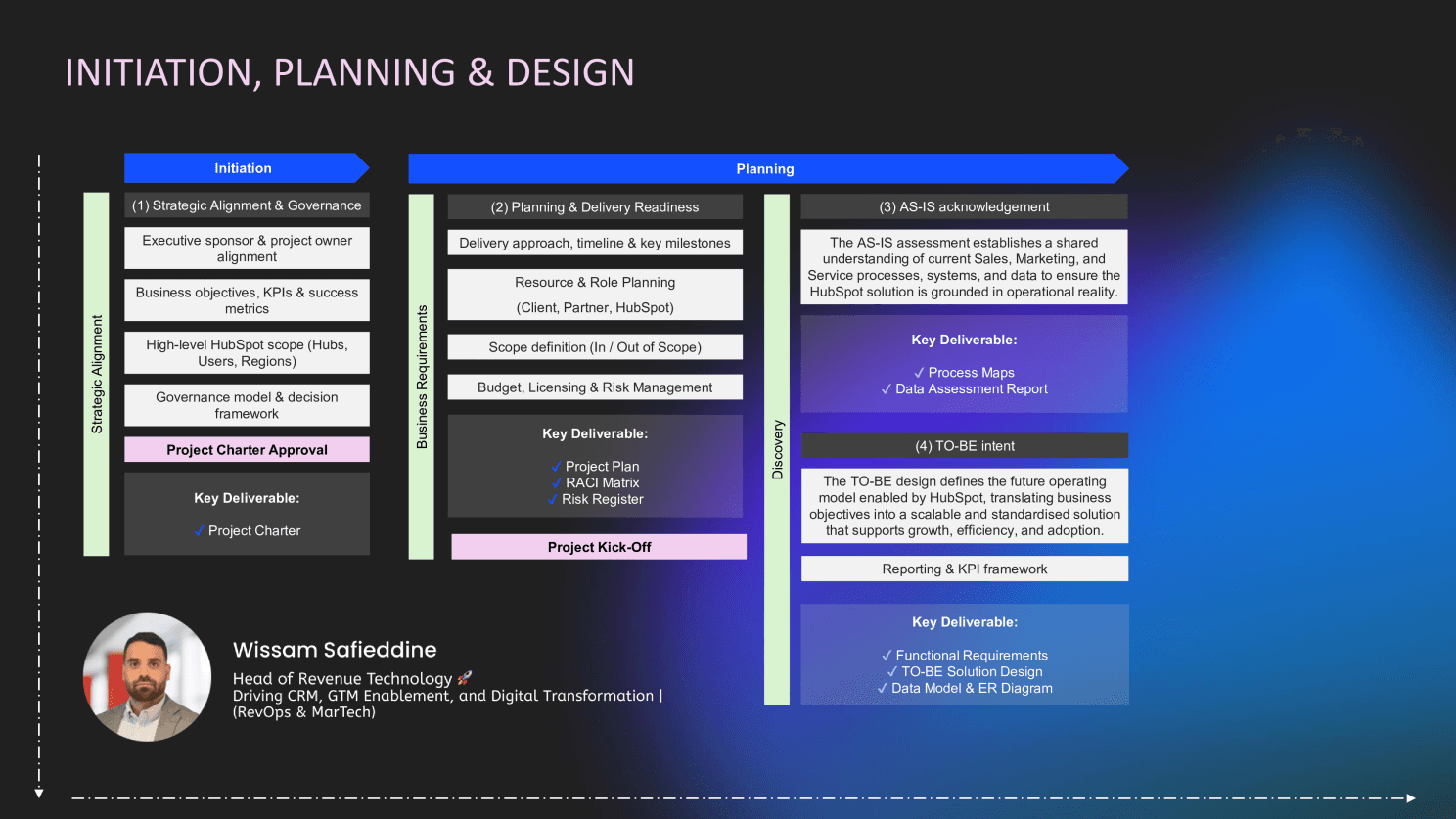
As shown in the Initiation, Planning & Design phase, the work starts well before configuration. Strategic alignment, governance, scope definition, and role clarity are not formalities. They determine who owns decisions once the system is live.
The AS-IS and TO-BE steps are particularly critical. The AS-IS grounds the deployment in operational reality. The TO-BE defines the future operating model HubSpot is expected to enable. Without both, teams end up automating today’s problems instead of designing for scale.
Execution is where behaviour gets locked in
Configuration is where intent becomes behaviour.
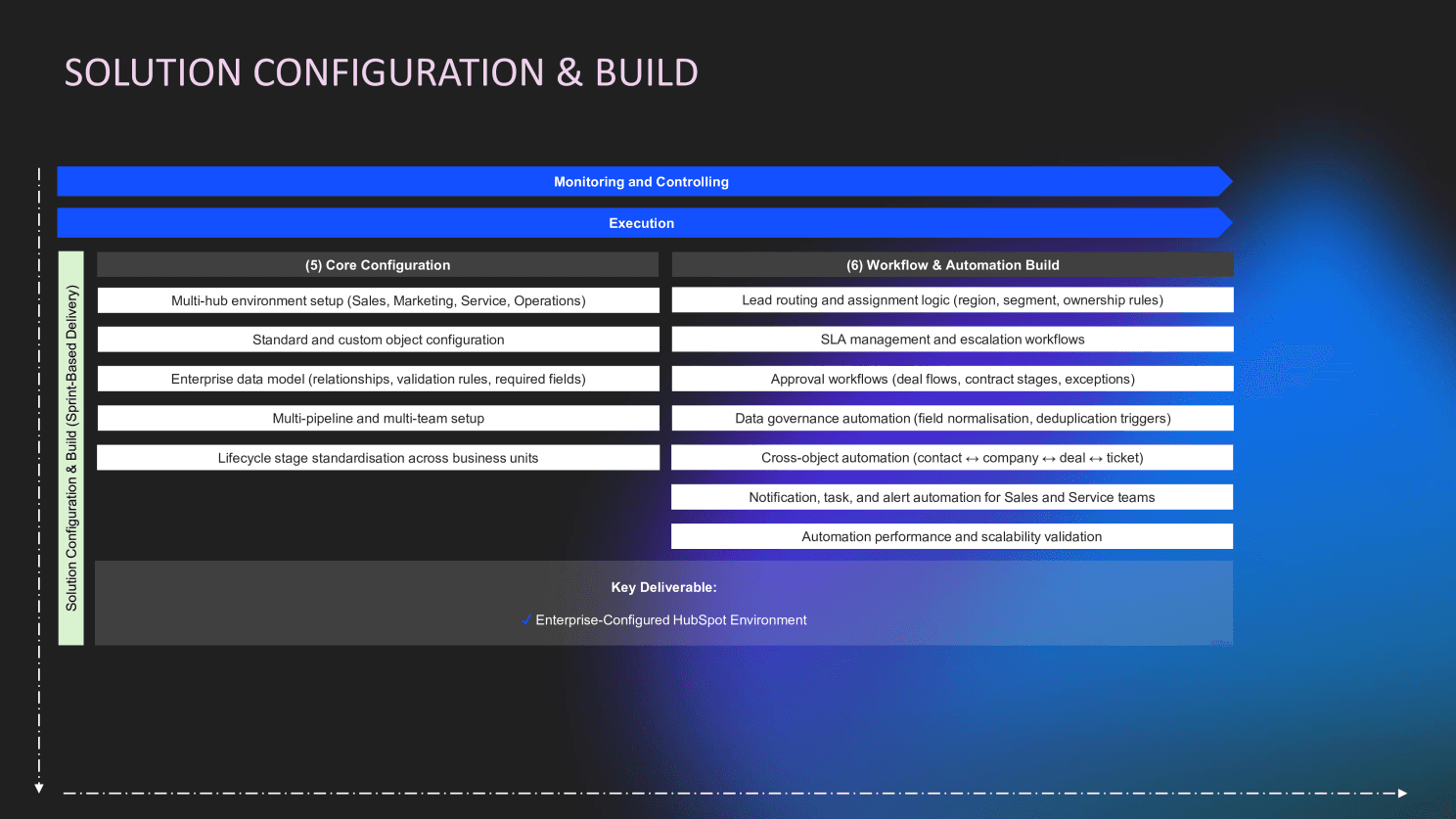
Sprint-based delivery works well for HubSpot, but only when the objective is behavioural change, not feature output. Data models, lifecycle stages, pipelines, and validation rules are not technical details. They are constraints that shape how teams work day to day.
Workflow and automation design is where many deployments overreach. Lead routing, approvals, SLAs, and cross-object automation need to reinforce clear ownership and escalation paths. When automation is built without governance, it scales inconsistency instead of fixing it.
Integrations and migration are control points, not plumbing
Integrations and data migration are often treated as plumbing. In practice, they are control points.
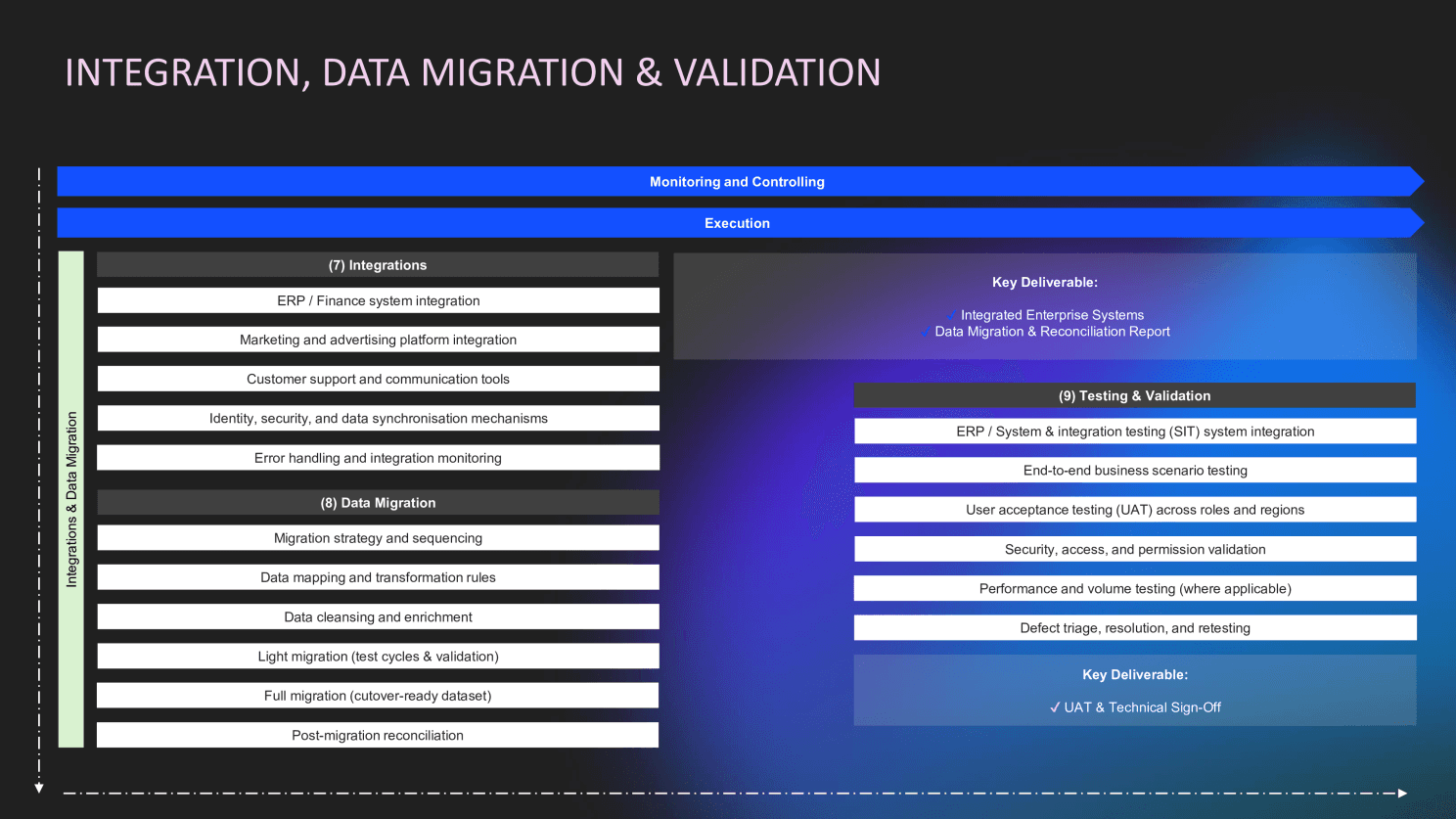
RP, finance, marketing, and support integrations define where truth lives and how quickly errors propagate. Without proper monitoring and error handling, issues surface weeks later as reporting gaps or broken workflows.
Migration should be intentional and staged. Light migrations for validation, followed by a controlled cutover, protect trust in the system. Perfect historical data is rarely required. Confidence in current data always is.

Go-live is not success
Go-live is simply the moment the system starts proving whether the design holds under real usage.
The most important work happens after.
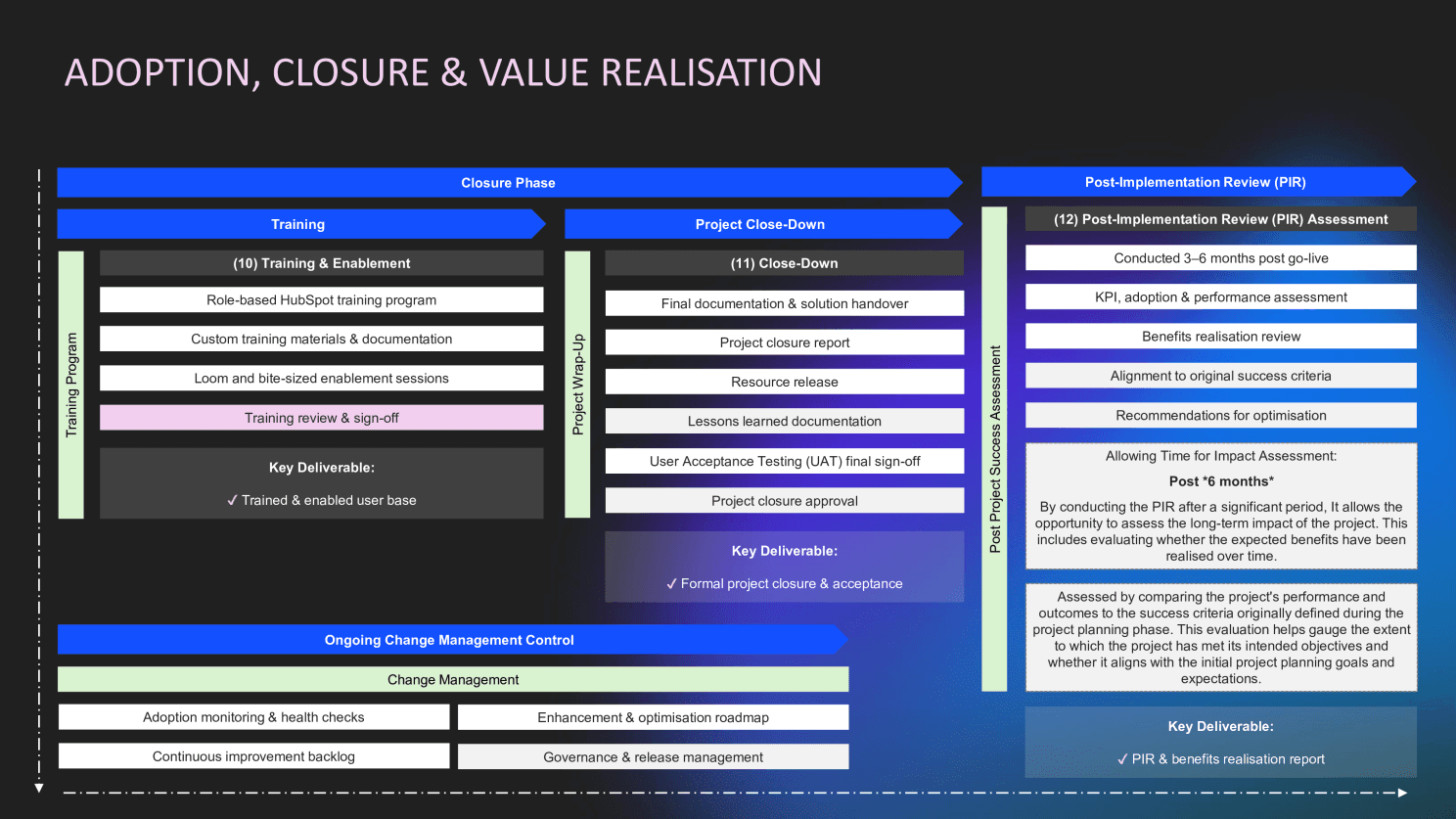
Training should reinforce expected behaviour, not explain features. Post-implementation reviews should assess whether the original success criteria are being met in practice, not whether the project was delivered on time.
The PIR phase, conducted months after go-live, is where teams either regain control or lose it entirely. This is where adoption, performance, and benefits realisation are measured against the original intent of the deployment.
Where most HubSpot deployments actually fail
Most failures are not technical. They are operational.
No clear owner for system behaviour post-launch
Change management treated as a project phase, not a permanent responsibility
No governance for enhancements and releases
No feedback loop between usage, outcomes, and optimisation
When this happens, definitions drift, automation is bypassed, and reporting becomes suspect. RevOps ends up firefighting symptoms instead of governing the system.
The real takeaway
HubSpot doesn’t fail because teams don’t know how to configure it.
It fails because nobody knows how it should behave six months later.
A successful deployment is not measured by:
number of objects built
number of workflows shipped
speed to go-live
It’s measured by whether the system continues to support clear decisions, consistent execution, and trust in the data as the business evolves.
HubSpot isn’t hard to deploy. It’s hard to operate.
And that distinction is exactly where most implementations go wrong.

More Deployment
